
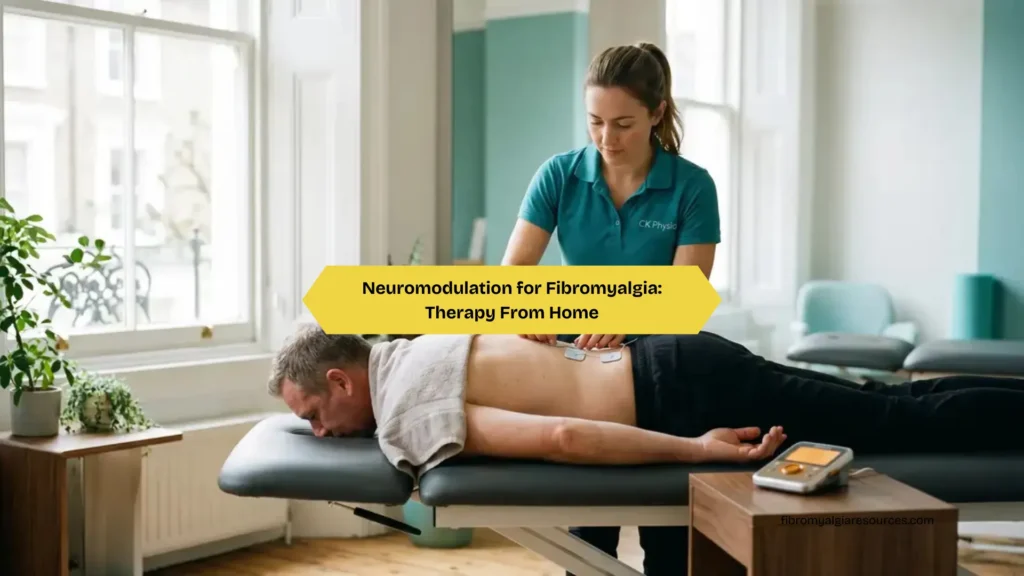
What if pain relief didn’t always require a clinic visit, injections, or heavy medications? What if some of the support for fibromyalgia symptoms could start right from your living room? That’s the idea behind neuromodulation for fibromyalgia, a growing approach focused on “retraining” how the nervous system processes pain. And more recently, people are talking about home-based tools and techniques that bring this therapy into everyday life.
Let’s break it down in a simple, realistic way.
What Is Neuromodulation, Really?
Before diving into neuromodulation for fibromyalgia, it helps to understand the basics.
Neuromodulation refers to techniques that change how nerves send and receive signals. Instead of blocking pain completely, it aims to adjust the way the nervous system reacts to it.
So when people ask what is a neuromodulator or what are neuromodulators, the answer is simple: they are tools or substances that influence nerve activity and brain signaling.
These can include:
- Electrical stimulation devices
- Magnetic stimulation techniques
- Certain medications or injections
- Wearable or portable devices
Some treatments in medical settings even include neuromodulator injections, depending on the condition being treated.
But fibromyalgia research is now exploring gentler, more accessible approaches too.
Neuromodulation for Fibromyalgia: Why It Matters
Fibromyalgia is not just muscle pain, it’s a nervous system condition. That’s why neuromodulation for fibromyalgia has become such an interesting area of study.
The goal is not to “turn off” pain, but to reduce the hypersensitivity in the brain and spinal cord that amplifies pain signals.
In other words, it tries to calm an overactive alarm system.
This is where neuromodulation fibromyalgia research becomes important. It focuses on resetting or adjusting pain pathways instead of only masking symptoms.
Home-Based Neuromodulation: Therapy From Your Couch
One of the biggest shifts in recent years is accessibility. Not all neuromodulation treatment requires clinical visits anymore.
Some people now use neuromodulation devices at home that are designed for comfort and simplicity. These may include wearable patches or gentle electrical stimulation tools.
This is where the idea of neuromodulation therapy from your couch comes in.
Home-based approaches may include:
- Portable TENS units (transcutaneous nerve stimulation)
- Guided nerve stimulation routines
- Relaxation-based neurofeedback techniques
- Breathing and sensory regulation exercises
These methods aim to gently influence the nervous system without invasive procedures.
So when people talk about neuromodulation for fibromyalgia, they are increasingly including at-home options, not just clinical treatments.
How Neuromodulation Therapy Works in Fibromyalgia
The core idea behind neuromodulation therapy is simple: retrain the nervous system.
Fibromyalgia often involves heightened pain sensitivity. Normal signals, like touch or movement, can feel amplified. Neuromodulation tries to reduce that amplification over time.
This is why researchers are studying neuromodulation technique approaches for chronic pain conditions.
It may help:
- Reduce pain intensity
- Improve sleep quality
- Lower nervous system overactivity
- Improve daily functioning
While results vary, the concept is promising enough that ongoing studies continue to expand.
What About Medical Neuromodulation Treatments?
In clinical settings, neuromodulator treatment can include more advanced approaches like implanted devices or targeted stimulation therapies. These are typically reserved for severe or treatment-resistant cases.
However, for fibromyalgia, most attention is now shifting toward non-invasive and home-based methods.
This is also where people often compare neuromodulation with other medical tools like medications or injections. Unlike neuromodulator injections, which directly target specific nerves or areas, neuromodulation devices work more broadly and gradually.
Can You Really Do Neuromodulation at Home?
Yes, some forms of neuromodulation for fibromyalgia can be done at home, but they are usually supportive therapies rather than standalone cures.
People often combine them with:
- Gentle stretching or movement
- Sleep hygiene routines
- Stress reduction techniques
- Pain management strategies
This makes it more of a lifestyle-based approach than a single treatment.
Think of it as nervous system training, not instant relief.
Why Fibromyalgia Patients Are Interested
Fibromyalgia affects how the brain processes sensory input. That’s why even small triggers can feel overwhelming.
People exploring neuromodulation for fibromyalgia often do so because:
- Standard medications don’t fully help
- They want non-drug options
- They prefer at-home management tools
- They are looking for long-term nervous system support
It fits into a broader shift toward personalized and holistic pain care.
Related Symptom Connections
Fibromyalgia doesn’t exist in isolation. Many patients also experience related issues like swallowing difficulties, digestive discomfort, and nerve sensitivity.
For example, some people report swallowing problems linked with nervous system sensitivity, like Dysphagia.
These overlapping symptoms show why neuromodulation fibromyalgia research often looks beyond just pain and focuses on the entire nervous system.
What Does the Research Say?
Studies on neuromodulation for fibromyalgia are still evolving. Some show promising improvements in pain perception and quality of life, while others highlight variability in response.
The biggest takeaway is this: fibromyalgia is complex, and no single therapy works for everyone.
Neuromodulation is best seen as one part of a larger care plan, not a standalone solution.
Wrapping Up
Neuromodulation for fibromyalgia represents a shift in how we think about chronic pain. Instead of only treating symptoms, it aims to retrain the nervous system itself.
From clinical procedures to neuromodulation devices used at home, this approach is expanding quickly. And while it’s not a cure, it offers something important, hope through nervous system regulation.
Whether you’re exploring neuromodulation therapy, learning about neuromodulator treatment, or just curious about new ways to manage symptoms, the key is understanding your body’s signals and working with them, not against them.
Fibromyalgia is complex. But so is the nervous system, and that means new pathways for relief are always emerging.
FAQs
1. What is neuromodulation for fibromyalgia?
It refers to techniques that adjust nervous system activity to reduce pain sensitivity.
2. Can neuromodulation therapy be done at home?
Yes, some non-invasive neuromodulation devices and techniques can be used at home.
3. Are neuromodulation devices safe?
Most non-invasive devices are considered safe when used correctly under guidance.
4. What are neuromodulators used for?
They are used to influence nerve activity and manage pain or neurological symptoms.
5. Does neuromodulation cure fibromyalgia?
No, it helps manage symptoms but does not cure the condition.