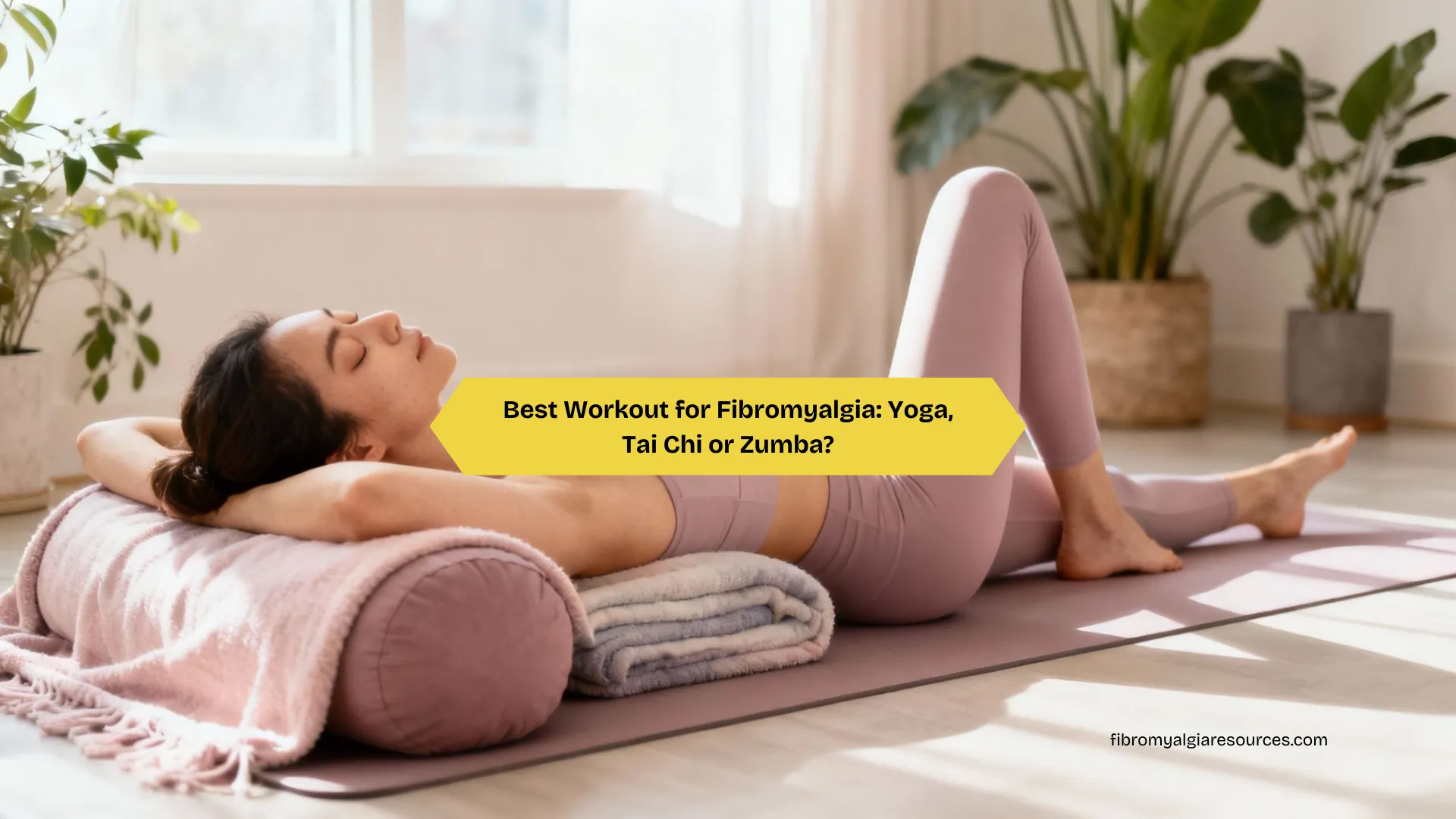
So, if you are living with fibromyalgia, then you must already know one truth: exercise is helpful… but also complicated. Too much hurts. Too little makes stiffness worse. So the big question becomes: what is the best workout for fibromyalgia?
Is it high-energy Zumba? Slow, mindful Tai Chi? Or calming Yoga?
Let’s break it down in a realistic, body-friendly way.
Why Exercise Feels Different with Fibromyalgia
Before choosing the best workout for fibromyalgia, it’s important to understand how your body responds.
Fibromyalgia affects how your nervous system processes pain. That means:
- Muscles can feel sore faster
- Recovery takes longer
- Overdoing exercise can trigger flare-ups
- Even light movement can feel intense on bad days
That’s why workout for fibromyalgia patients must focus on balance, not intensity.
The goal is not to push harder. The goal is to move smarter.
So What Is the Best Workout for Fibromyalgia?
The truth is, there is no single answer. The best workout for fibromyalgia depends on your energy levels, pain patterns, and consistency.
But three options stand out most in research and patient experience:
- Yoga
- Tai Chi
- Zumba
Each one works differently with your body. Let’s compare them.
1. Yoga: Gentle Strength and Flexibility
Yoga is one of the most recommended workout routines for fibromyalgia because it combines stretching, breathing, and relaxation.
It helps with:
- Muscle stiffness
- Stress reduction
- Sleep improvement
- Body awareness
A gentle full body workout for fibromyalgia using yoga can improve flexibility without overwhelming the nervous system.
However, intensity matters. Avoid advanced poses or long holds on flare days.
Think of yoga as slow communication with your body, not punishment.
For some people, yoga also supports recovery alongside lifestyle changes like nutrition and supplements.
2. Tai Chi: The Calm Power Workout
Tai Chi is often called “meditation in motion,” and many people find it to be the best workout for fibromyalgia when pain levels are high.
It uses slow, flowing movements that:
- Improve balance
- Reduce stress
- Calm the nervous system
- Support joint mobility
Unlike high-impact exercise, Tai Chi doesn’t strain the body. It’s ideal for workouts for those with fibromyalgia who need something gentle but effective.
Studies on chronic pain suggest Tai Chi may improve quality of life and reduce pain sensitivity over time.
3. Zumba: Fun, But Is It Too Much?
Now the big question: is Zumba a good workout for fibromyalgia?
Zumba is fun, energetic, and great for mood, but it’s also high-impact.
For some people, a light version of Zumba can be a great workout for fibromyalgia patients, especially on good days. It boosts:
- Endorphins
- Cardiovascular health
- Motivation
But here’s the catch: it can also trigger flare-ups if pushed too hard.
So Zumba can be part of your workouts for people with fibromyalgia, but it should be modified:
- Short sessions
- Low-impact steps
- Frequent breaks
Think of it as “joy movement,” not intense cardio.
Gym Workouts for Fibromyalgia: Are They Safe?
Many people also ask about the gym workout for fibromyalgia or the best gym workout for fibromyalgia.
The answer: yes, but with caution.
A safe gym plan may include:
- Light resistance training
- Stationary cycling
- Water-based exercise
- Stretching machines
A fibromyalgia workout for weight loss should focus on consistency, not intensity. Slow progress is still progress.
Avoid:
- Heavy lifting
- High-impact circuits
- Overtraining sessions
Your nervous system needs recovery time just as much as your muscles do.
Building the Right Routine for Your Body
The best workout for fibromyalgia is not about copying a trend, it’s about listening to your body daily.
A balanced routine might include:
- Yoga on stiff days
- Tai Chi for recovery days
- Light Zumba when energy is high
- Rest days without guilt
These workouts for those with fibromyalgia work best when rotated instead of forced.
Consistency matters more than intensity.
What Science Says About Exercise and Fibromyalgia
Research shows that regular low-impact movement can improve pain and fatigue over time in fibromyalgia patients. The key is gradual progression and avoiding overload.
That means the best workout for fibromyalgia is usually:
- Low impact
- Gentle on joints
- Consistent over time
- Adaptable to symptoms
Fibromyalgia doesn’t respond well to “push harder” fitness culture. It responds to pacing and patience.
How to Know You’re Doing the Right Workout
You’re on the right track if:
- You feel mildly tired, not exhausted
- Pain does not spike sharply afterward
- You recover within a reasonable time
- You feel more flexible over weeks
If workouts consistently cause flare-ups, it’s a sign to scale back.
Remember: the best workout for fibromyalgia supports your life, it doesn’t punish your body.
Final Verdict: Yoga, Tai Chi, or Zumba?
So which one wins?
- Yoga = flexibility + calm
- Tai Chi = balance + nervous system regulation
- Zumba = joy + cardio (with caution)
The real answer? The best workout for fibromyalgia is the one you can do consistently without triggering flare-ups. Most people benefit from a combination of all three, adjusted to their energy levels.
FAQ’s
1. What is the best workout for fibromyalgia?
Low-impact exercises like yoga, Tai Chi, and modified Zumba are often best.
2. Is Zumba a good workout for fibromyalgia?
Yes, but only in low-impact, short sessions to avoid overexertion.
3. Can gym workouts help fibromyalgia?
Yes, light resistance and cardio can help when done gently.
4. What is the best gym workout for fibromyalgia?
Walking on a treadmill, light weights, and cycling are commonly recommended.
5. Can exercise help fibromyalgia pain?
Yes, consistent low-impact exercise can reduce stiffness and improve function over time.